
Laboratory Drying Ovens Explained: Applications, Types, and How to Choose the Right Model
Laboratory Heating Methods: Compare water baths, dry baths, hotplate magnetic stirrers, drying ovens, and incubators to choose the right solution for your laboratory.
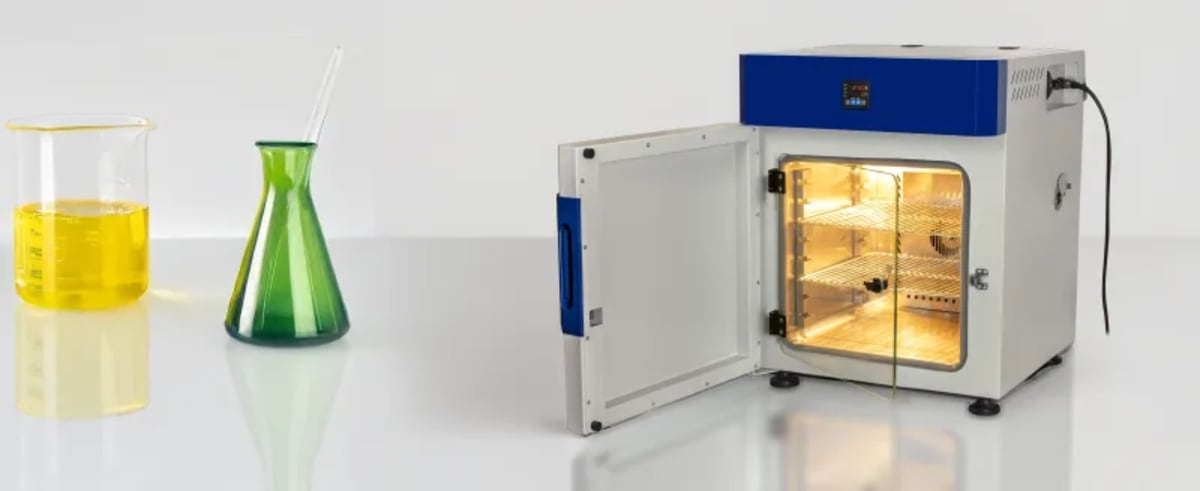
Laboratory Drying Ovens Explained: Applications, Types, and How to Choose the Right Model
Introduction
Laboratory drying ovens are among the most widely used temperature-controlled instruments in modern laboratories. While they are commonly associated with drying laboratory glassware, their applications extend far beyond this routine task. They are widely used for moisture determination, sample conditioning, thermal aging, material testing, heat treatment, and quality control across research, pharmaceutical, industrial, environmental, and educational laboratories.
Selecting the right drying oven directly influences workflow efficiency, sample consistency, and the reliability of analytical results. Different laboratory procedures require specific heating characteristics, airflow systems, chamber capacities, and temperature ranges, making it essential to choose equipment that matches both current and future operational needs.
The DragLab Laboratory Drying Oven Series is designed to provide precise temperature control, uniform heat distribution, and durable stainless-steel construction for dependable laboratory performance. Combining intuitive digital controls with reliable heating technology, DragLab drying ovens help laboratories achieve consistent and reproducible thermal processing across a wide range of applications.
Visit DragLab Products Page: https://www.drag-lab.de/en/products/drying-oven-series
This guide explains how laboratory drying ovens operate, compares the main airflow technologies, explores their most common applications, and highlights the key factors laboratories should consider when selecting the most appropriate model.
What Is a Laboratory Drying Oven?
A laboratory drying oven is a temperature-controlled instrument that uses dry heat to remove moisture, condition materials, or expose samples to elevated temperatures for a defined period. Unlike laboratory incubators, which maintain conditions suitable for biological samples, drying ovens are specifically designed for thermal processing applications.
Electric heating elements and controlled air circulation maintain stable temperatures throughout the chamber, ensuring consistent heating and reproducible laboratory results. Because of their versatility, drying ovens are widely used in research institutions, universities, hospitals, pharmaceutical companies, industrial production facilities, and quality control laboratories.
How Does a Laboratory Drying Oven Work?
A laboratory drying oven generates heat through electric heating elements positioned around the chamber. Depending on the model, heat is distributed using either natural convection or forced air convection to maintain stable and uniform heating conditions.
The operating process typically involves:
- Setting the desired temperature using the digital controller.
- Heating elements raising the chamber to the programmed temperature.
- Natural or fan-assisted airflow distributing heat evenly.
- Temperature sensors continuously monitoring and regulating the chamber.
- Samples remaining under controlled heating until the cycle is complete.
This automated process minimizes temperature fluctuations and ensures consistent heating performance for reliable laboratory results.
Why Are Laboratory Drying Ovens Important?
Controlled heating is essential for many laboratory procedures that require accurate sample preparation before analysis. Proper use of a drying oven helps laboratories:
- Remove residual moisture from samples.
- Improve measurement consistency.
- Support standardized testing procedures.
- Reduce experimental variability.
- Prepare laboratory glassware for analytical work.
- Improve quality control processes.
- Maintain reproducible heating conditions.
Reliable temperature control is particularly important for laboratories operating under recognized quality management systems, where repeatability and traceability are essential.
Common Applications of Laboratory Drying Ovens
Laboratory drying ovens support a broad range of scientific and industrial applications.
Research Laboratories
- Sample drying.
- Material conditioning.
- Thermal aging studies.
- Preparation before analytical testing.
Pharmaceutical Laboratories
- Raw material evaluation.
- Stability studies.
- Packaging material testing.
- Moisture-related quality assessments.
Food Testing Laboratories
- Moisture determination.
- Sample preparation.
- Product quality evaluation.
- Shelf-life studies.
Industrial Quality Control
- Material performance testing.
- Product consistency evaluation.
- Component drying before inspection.
- Manufacturing quality assurance.
Universities and Educational Laboratories
Drying ovens are widely used in teaching laboratories for practical training in controlled heating, sample preparation, moisture analysis, and material testing, helping students gain hands-on experience with professional laboratory equipment.
Natural Convection Drying Ovens
Natural convection drying ovens distribute heat through the natural circulation of warm air inside the chamber without the use of an internal fan. Because airflow is gentle, these ovens are well suited for applications where minimizing air movement helps protect lightweight or heat-sensitive samples.
Advantages
- Gentle and stable heat distribution.
- Minimal airflow disturbance.
- Suitable for heat-sensitive materials.
- Energy-efficient operation for routine laboratory procedures.
Typical Applications
Natural convection drying ovens are commonly used for:
- Laboratory glassware drying.
- Routine sample preparation.
- Heat-sensitive materials.
- Educational laboratories.
- General research applications.
Forced Air Convection Drying Ovens.
Forced air convection drying ovens use an internal fan to circulate heated air evenly throughout the chamber. This improves temperature uniformity, accelerates heating, and allows faster recovery after the door is opened.
The DragLab Drying Oven Series is ideal for laboratories requiring consistent drying performance, high sample throughput, and continuous operation.
Advantages
- Faster heating and stabilization.
- Excellent temperature uniformity.
- Rapid recovery after door openings.
- Consistent drying across multiple samples.
- Ideal for high-throughput laboratory workflows.
Typical Applications
- Industrial laboratories.
- Pharmaceutical manufacturing.
- Material testing.
- Routine quality control.
- Continuous laboratory operation.
Natural Convection vs. Forced Air Convection
|
Feature |
Natural Convection |
Forced Air Convection |
|
Air Movement |
Natural airflow |
Fan-assisted airflow |
|
Temperature Uniformity |
Very Good |
Excellent |
|
Temperature Recovery |
Moderate |
Fast |
|
Sample Disturbance |
Minimal |
Moderate |
|
Best for Delicate Samples |
Excellent |
Good |
|
High Sample Throughput |
Moderate |
Excellent |
The choice between natural and forced-air convection depends on the intended laboratory application. While natural convection is used in some laboratory environments where gentle airflow is preferred, the DragLab Drying Oven Series utilizes forced-air circulation and PID temperature control to provide uniform heating, rapid temperature recovery, and dependable drying performance for routine laboratory applications
Choosing the Right Laboratory Drying Oven
Selecting a laboratory drying oven involves evaluating how the equipment will support daily laboratory operations rather than simply comparing technical specifications.
1. Laboratory Application
Begin by identifying the primary application, whether it involves glassware drying, moisture determination, material conditioning, thermal aging, or routine quality control. Choosing an oven that matches the laboratory workflow improves both efficiency and long-term performance.
2. Temperature Requirements
The selected oven should provide an operating temperature range suitable for the intended application while maintaining stable and uniform heating throughout the chamber.
3. Chamber Capacity
Choose a chamber size based on:
- Daily sample volume.
- Container dimensions.
- Available laboratory space.
- Number of users.
- Future laboratory expansion.
Selecting an appropriately sized oven improves productivity while avoiding unnecessary energy consumption.
4. Temperature Stability
Accurate laboratory work depends on maintaining consistent temperature throughout the chamber. Poor temperature uniformity may lead to uneven drying, variable moisture content, inconsistent material properties, and reduced repeatability.
5. Digital Controls
Modern drying ovens simplify operation through features such as:
- Digital temperature display.
- Programmable timers.
- Calibration functions.
- Audible and visual alarms.
- Automatic temperature regulation.
- Over-temperature protection.
These functions improve operational accuracy while reducing the possibility of user error.
6. Safety Features
Safety is an important consideration when selecting temperature-controlled equipment. Essential features include:
- Independent over-temperature protection.
- Automatic shutdown during abnormal operation.
- Heat-resistant chamber construction.
- Reliable door sealing.
- Stable shelving systems.
These features help protect laboratory personnel, equipment, and valuable samples while supporting safe long-term operation.
Conclusion
Laboratory drying ovens are essential for scientific research, pharmaceutical production, industrial quality control, food testing, environmental analysis, and education. By providing controlled dry heating, they support reliable sample preparation, improve analytical accuracy, and ensure reproducible laboratory results.
Choosing the right drying oven requires evaluating laboratory applications, airflow technology, chamber capacity, temperature stability, digital controls, and safety features. Combined with proper operation and preventive maintenance, the appropriate equipment improves laboratory efficiency while protecting valuable samples and extending instrument lifespan.
The DragLab Laboratory Drying Oven Series combines precise temperature control, dependable airflow performance, durable stainless-steel construction, and intuitive digital operation to support the needs of modern laboratories. Whether used for routine testing or advanced research, DragLab drying ovens deliver reliable thermal processing that laboratories can depend on every day.
Looking for a laboratory drying oven that delivers precise temperature control and dependable long-term performance?
Explore the DragLab Laboratory Drying Oven Series to discover solutions designed for research laboratories, universities, pharmaceutical manufacturers, industrial quality control facilities, food testing laboratories, and educational institutions.
Learn more:
DragLab Laboratory Drying Oven Series
https://www.drag-lab.de/en/products/drying-oven-series
Or contact the DragLab technical team for expert guidance in selecting the drying oven that best matches your laboratory applications, workflow, and temperature requirements.
https://www.drag-lab.de/en/Contactus
Sources
DragLab Resources
- DragLab Product Catalog – Laboratory Drying Oven Series
- DragLab Official Laboratory Drying Oven Product Pages
- DragLab Technical Documentation and User Manuals
Scientific References
- ISO/IEC 17025 – General Requirements for the Competence of Testing and Calibration Laboratories
- OECD Principles of Good Laboratory Practice (GLP)
- World Health Organization (WHO) – Laboratory Quality Management System Handbook.