





Distilled Water vs Deionized Water: Which Is Better for Laboratories?
Learn the difference between distilled water and deionized water in laboratories. Discover how each purification method works and which one is best for scientific applications.
Water purity is a fundamental requirement in laboratory science. Whether used for preparing reagents, cleaning glassware, or supporting analytical procedures, the quality of water directly influences experimental accuracy and reproducibility. Two of the most commonly used types of purified water in laboratories are distilled water and deionized (DI) water.
Although both types of water are purified, they are produced using different methods and are suitable for different laboratory applications. Understanding the differences between distilled and deionized water helps laboratories choose the appropriate purification method for their specific research needs.
What Is Distilled Water?
Distilled water is produced through a thermal distillation process that separates water from contaminants by heating and condensation. During distillation, water is heated until it evaporates into steam. Most dissolved salts, minerals, and many contaminants remain in the boiling chamber because they do not vaporize with the water.
The steam is then cooled in a condenser and converted back into liquid form, producing purified distilled water.
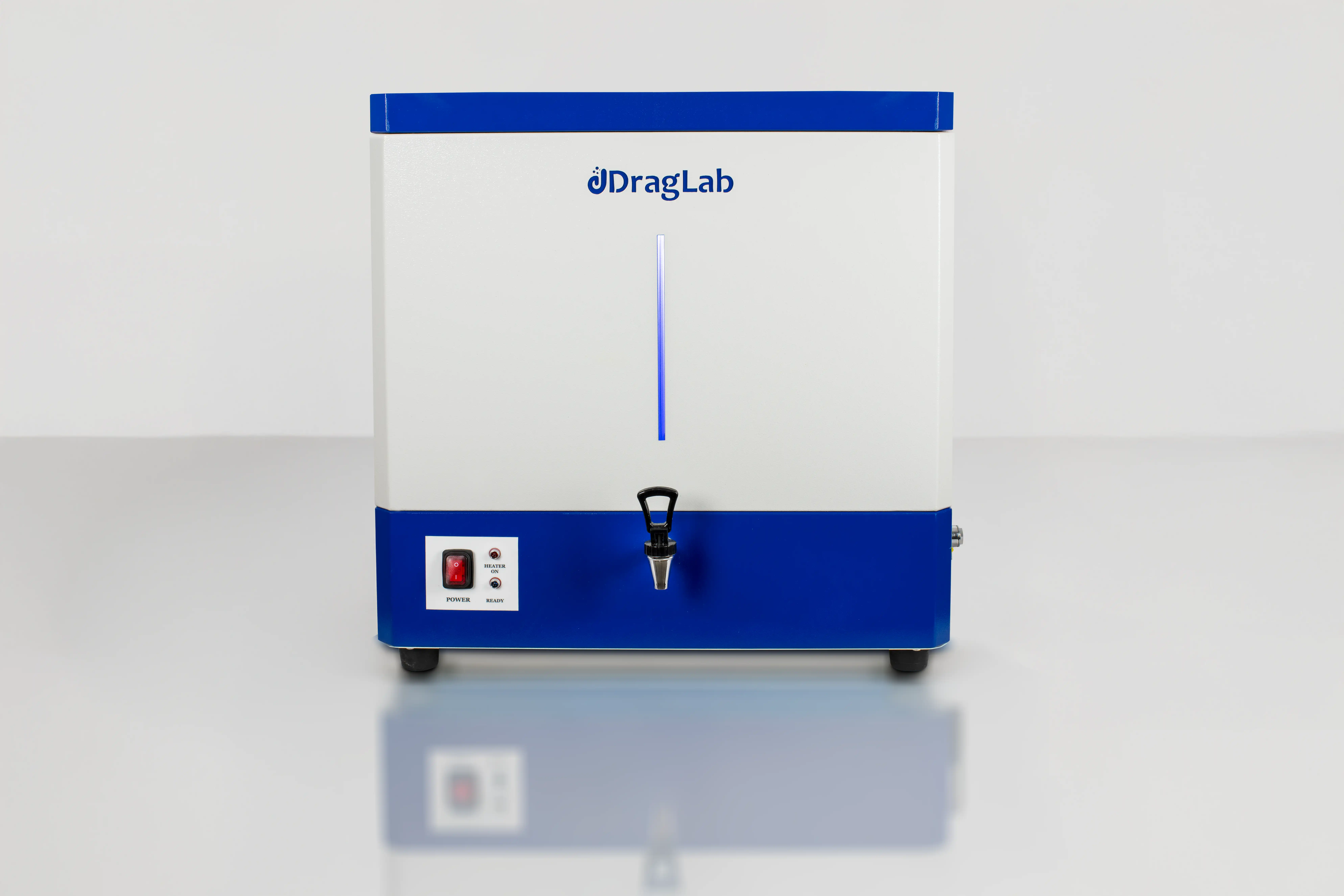
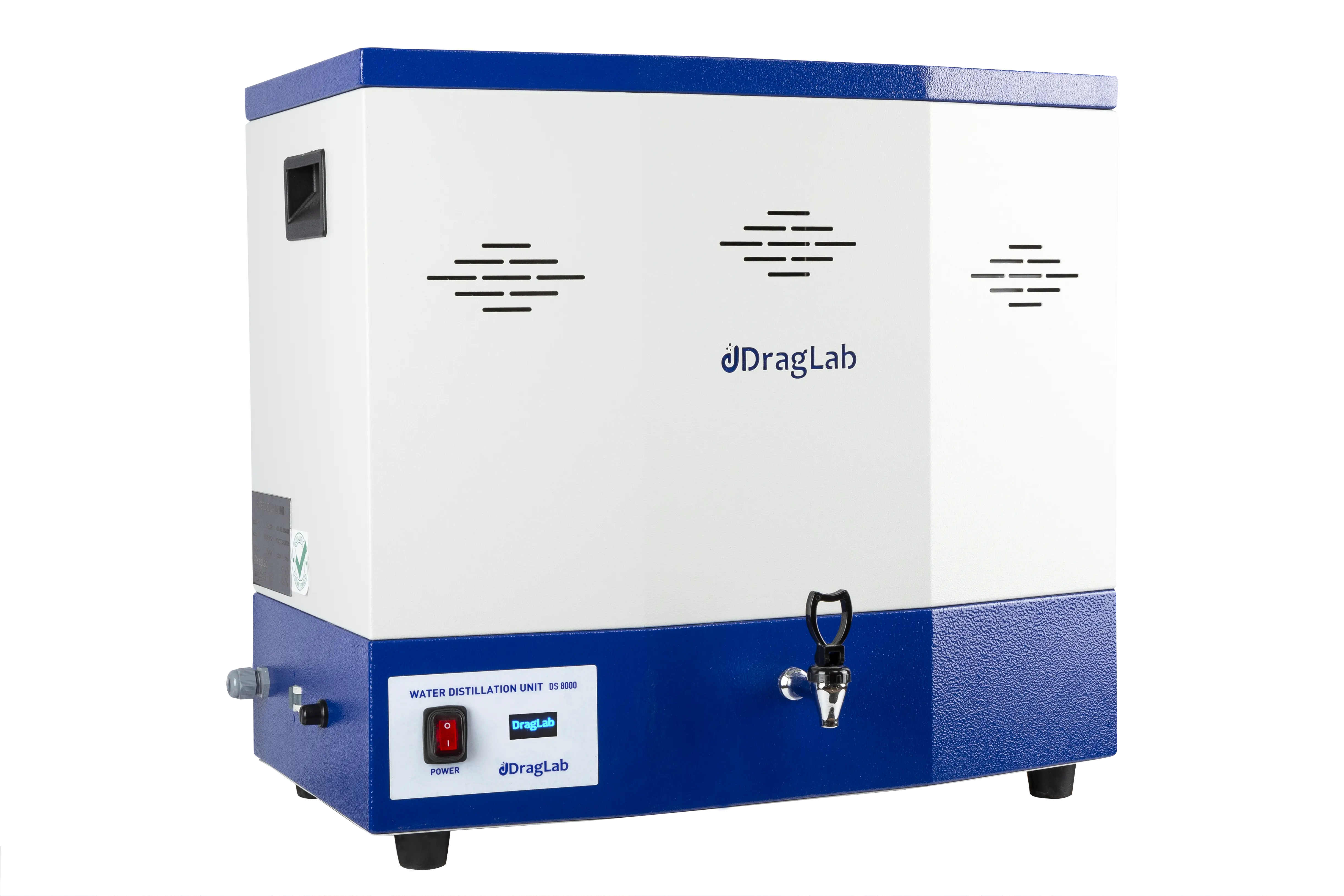
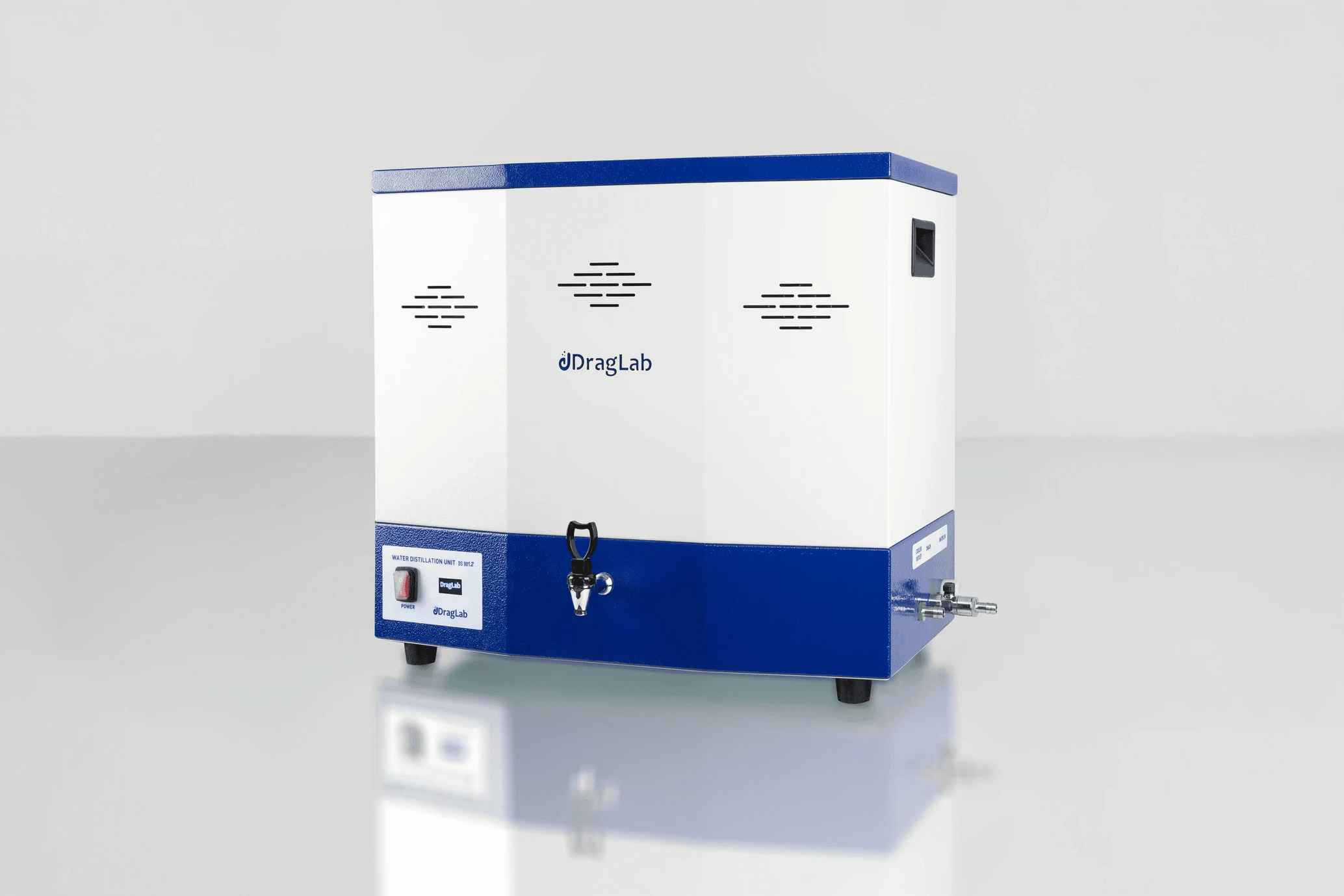
Modern laboratory systems such as the DragLab Water Still Series use stainless steel boiling chambers and condensers to ensure efficient and reliable distillation. These systems typically produce distilled water with conductivity around ~2.5 µS/cm at 25°C, making it suitable for many laboratory applications.
Distillation is particularly effective at removing:
- Dissolved minerals and salts
- Many microorganisms and bacteria
- Organic contaminants with higher boiling points
- Particulate impurities
Because of its reliability and simplicity, water distillation remains widely used in research laboratories, pharmaceutical facilities, and educational institutions.
What Is Deionized Water?
Deionized water is produced using ion exchange technology, which removes charged particles (ions) from water. In this process, water passes through specialized ion exchange resins that replace dissolved mineral ions with hydrogen (H⁺) and hydroxide (OH⁻) ions.
These ions then combine to form pure water (H₂O), effectively removing many dissolved salts and minerals from the original water source.
Deionization systems are commonly used in laboratories where low ionic content is required. Because the process removes ions efficiently, deionized water can achieve very low conductivity levels compared to distilled water.
However, ion exchange systems do not necessarily remove:
- Organic molecules
- Bacteria or microorganisms
- Certain dissolved gases
Additional filtration or sterilization may therefore be required depending on the application.
Key Differences Between Distilled and Deionized Water
Although both purification methods improve water quality, they differ in their purification mechanisms and laboratory uses.
|
Feature |
Distilled Water |
Deionized Water |
|
Purification Method |
Thermal distillation |
Ion exchange |
|
Removes Minerals |
Yes |
Yes |
|
Removes Microorganisms |
Generally yes (via boiling) |
Not always |
|
Removes Organic Compounds |
Often |
Limited |
|
Conductivity |
Low (~2.5 µS/cm) |
Very low (depending on system) |
|
Maintenance |
Simple cleaning |
Resin replacement required |
These differences determine which purification method is more appropriate for specific laboratory workflows.
When Should Laboratories Use Distilled Water?
Distilled water is often preferred in laboratories that require reliable removal of minerals and biological contaminants.
Common applications include:
Microbiology and Culture Media Preparation
Distilled water is frequently used to prepare microbiological growth media because the boiling process reduces microbial contamination.
Glassware Cleaning
Distilled water prevents mineral deposits on laboratory glassware and analytical instruments.
Pharmaceutical Research
Pharmaceutical laboratories often use distilled water for formulation preparation and quality control procedures.
General Laboratory Work
Many routine laboratory procedures rely on distilled water because it provides consistent purity without complex system maintenance.
When Is Deionized Water Preferred?
Deionized water is typically used in applications where very low ionic concentration is required.
Examples include:
- Analytical chemistry procedures
- Instrument calibration
- Chromatography and spectroscopy
- Electrochemical experiments
Because these techniques can be sensitive to trace ions, DI water may be necessary to maintain accurate results.
Distilled Water in Laboratory Workflows
Many laboratories use distilled water as a reliable primary purification method. Distillation systems provide consistent water quality with relatively simple maintenance requirements compared to more complex purification technologies.
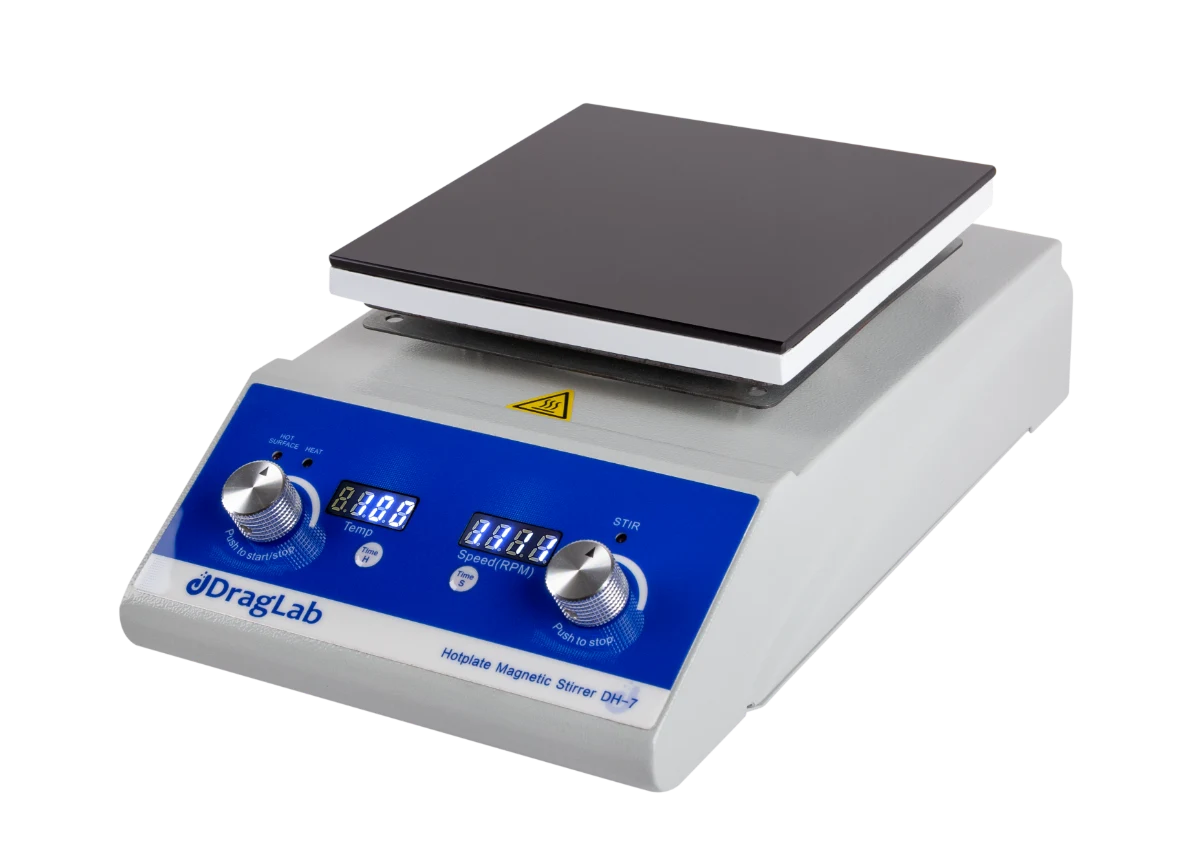
Laboratories also rely on other heating equipment to support experimental workflows. For example, devices such as the DragLab Hotplate Magnetic Stirrer Series are widely used for reagent preparation, solution heating, and controlled mixing during experimental procedures. When used alongside reliable water purification systems, these instruments help maintain precise and repeatable laboratory conditions.
Choosing the Right Water Purification Method
Selecting between distilled water and deionized water depends on the laboratory's specific applications and purity requirements.
Distilled water may be preferable when laboratories require:
- Removal of biological contaminants
- Reliable purification for general laboratory work
- Durable and low-maintenance purification systems
Deionized water may be more suitable when laboratories require:
- Extremely low ionic concentrations
- High-precision analytical procedures
- Integration with multi-stage purification systems
In many cases, laboratories use a combination of purification methods to achieve the required water quality.
Conclusion
Both distilled water and deionized water play important roles in modern laboratory operations. While distillation removes a wide range of contaminants through evaporation and condensation, deionization focuses specifically on eliminating dissolved ions.
Laboratories must evaluate their experimental requirements, analytical sensitivity, and workflow demands when selecting a purification method. Systems such as the DragLab Water Still Series provide reliable distilled water production for many scientific applications, ensuring consistent water purity for research, pharmaceutical testing, and routine laboratory procedures.
By understanding the strengths of each purification method, laboratories can choose the most appropriate solution to support accurate and reproducible scientific results.