





Water Purity in Laboratories: Types, Uses & Standards
Learn why water purity matters in laboratories, explore water types, uses, and standards, and understand the role of distilled water in daily lab workflows.
Abstract
Water is the most widely used reagent in laboratory environments, yet it is also one of the most frequently underestimated sources of analytical error. Impurities such as dissolved ions, organic compounds, microorganisms, gases, and particulates can significantly affect experimental accuracy, reproducibility, and equipment longevity. This article provides a practical and scientific overview of laboratory water purity, including common water types, their applications, and the standards that define acceptable quality levels. Special attention is given to distilled water as a dependable and widely adopted solution for laboratories seeking consistent, high-purity water for daily operations.
1. Introduction
In modern laboratories—whether clinical, research, industrial, or educational—water is not merely a utility but a critical reagent. It is used directly in analytical methods, reagent and media preparation, cleaning and rinsing procedures, sterilization, and as a feed source for laboratory instruments such as autoclaves and water baths.
The presence of uncontrolled impurities can compromise analytical results, interfere with chemical reactions, promote microbial growth, and accelerate corrosion or fouling of laboratory equipment. Ensuring the correct level of water purity is therefore essential for maintaining data integrity, regulatory compliance, and long-term operational efficiency.
2. Common Impurities in Laboratory Water
Raw or tap water typically contains a wide range of contaminants that are unsuitable for laboratory use, including:
-
Inorganic ions (e.g., calcium, magnesium, chlorides, sulfates)
-
Organic compounds originating from natural sources or industrial activity
-
Microorganisms such as bacteria and fungi
-
Pyrogens and endotoxins, particularly critical in biological and pharmaceutical applications
-
Dissolved gases, which may interfere with sensitive analytical techniques
The concentration and composition of these impurities vary by geographic location and water source, making untreated water unreliable for controlled laboratory workflows.
3. Types of Laboratory Water and Their Uses
3.1 Tap Water
Tap water is generally unsuitable for direct laboratory use due to its variable and uncontrolled impurity profile. Its role in laboratories is typically limited to non-critical cleaning tasks or as a feed source for downstream purification systems.
3.2 Distilled Water
Distilled water is produced by boiling water to generate steam and subsequently condensing the steam back into liquid form. This thermal separation process effectively removes a broad spectrum of contaminants, including:
-
Dissolved salts and inorganic minerals
-
Most organic substances
-
Microorganisms, bacteria, and pyrogens
Because impurities with higher boiling points remain in the evaporation chamber, the resulting condensate achieves a consistently high level of purity suitable for laboratory use.
Distilled water is widely applied in laboratory environments for:
-
Media and buffer preparation
-
Glassware rinsing and final cleaning
-
Sterilization processes
-
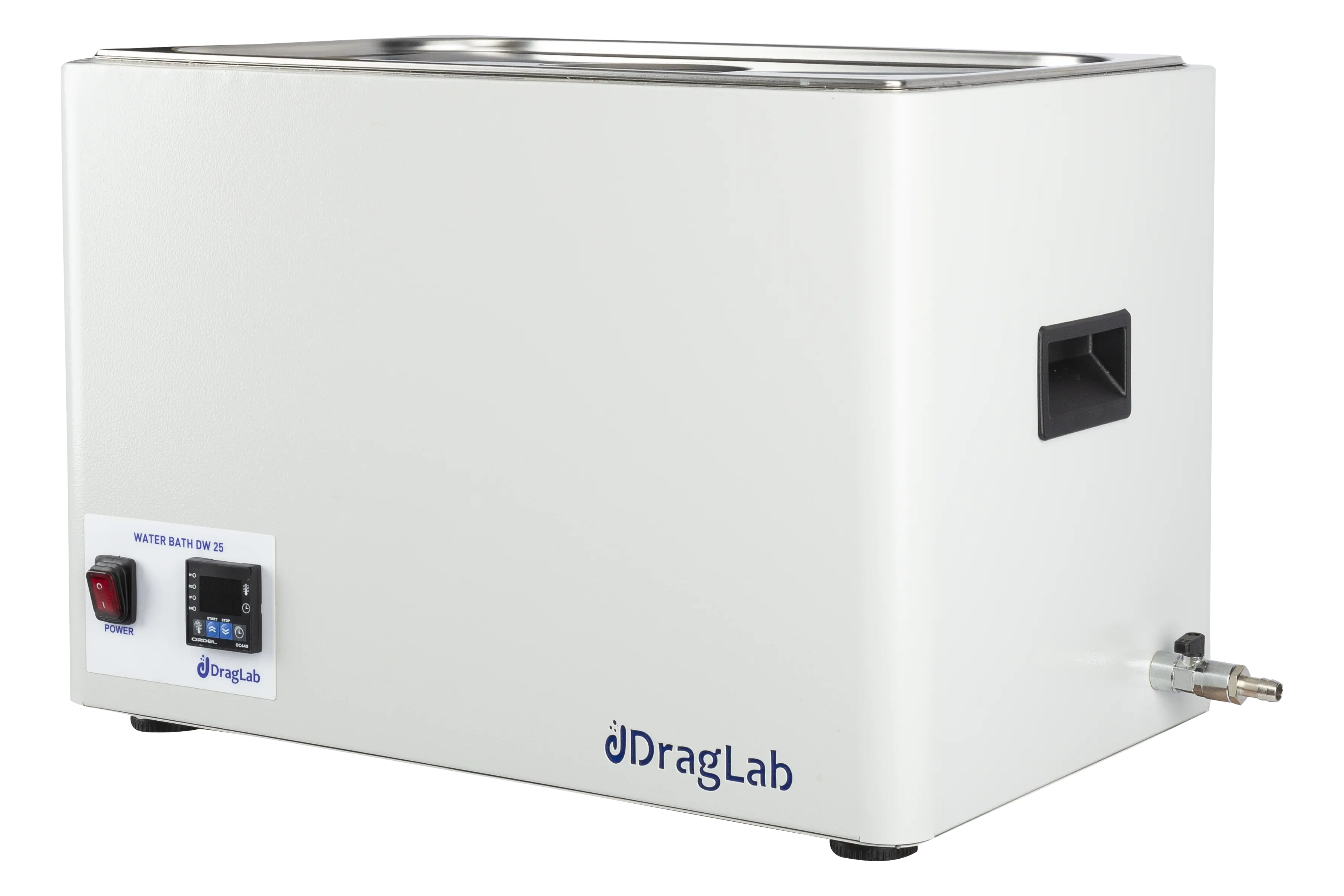
Autoclaves and water baths
-
General analytical, research, and routine laboratory applications
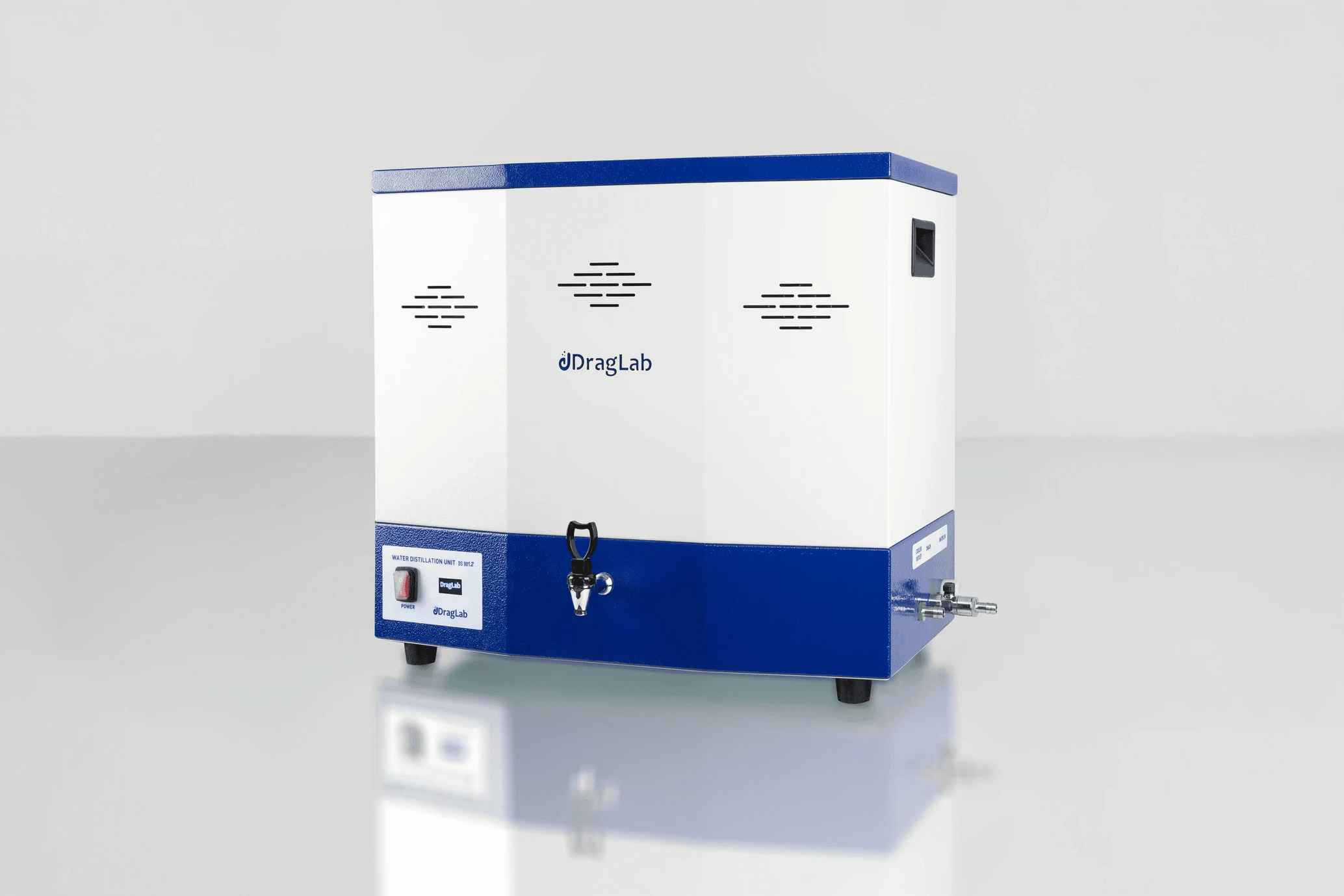
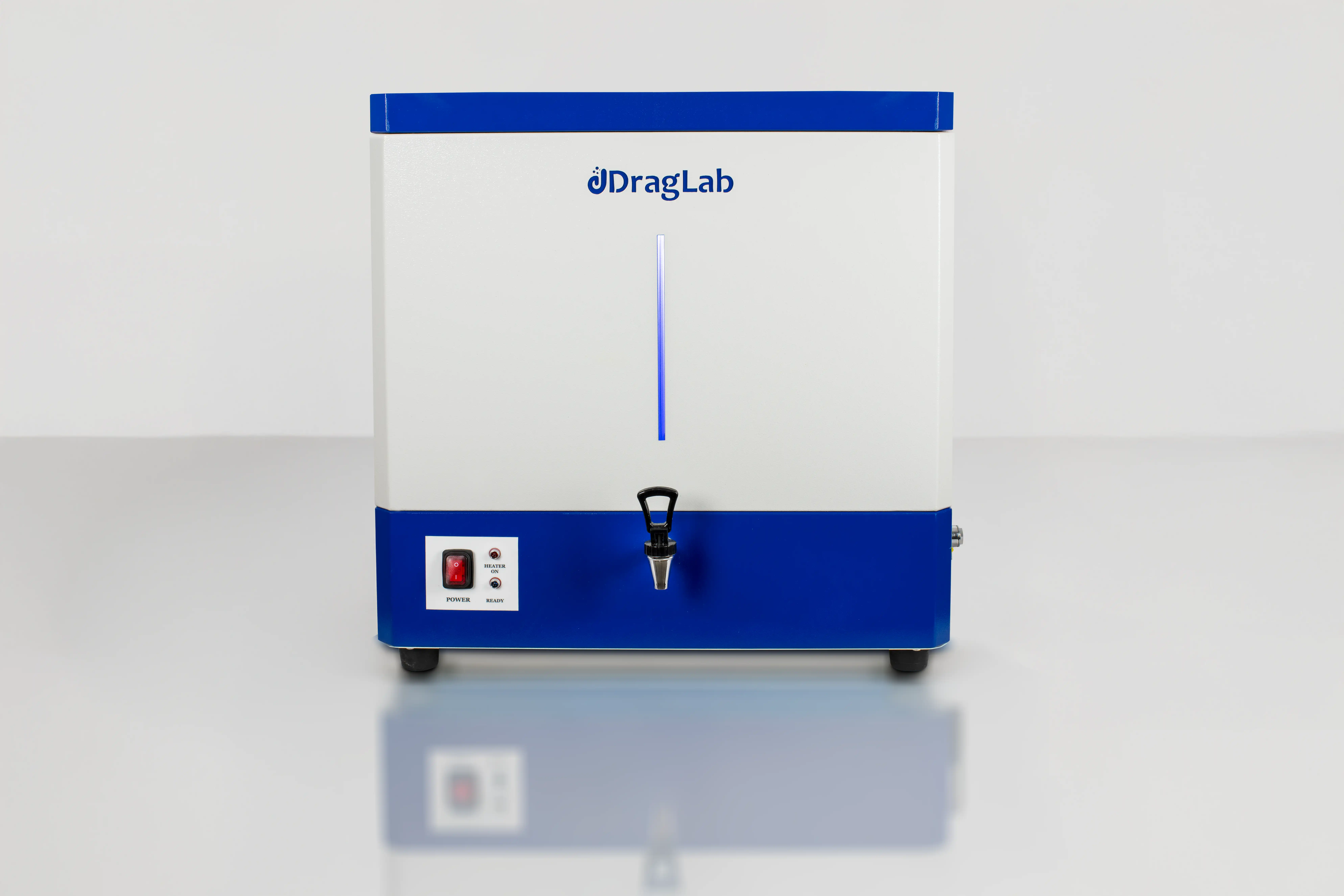
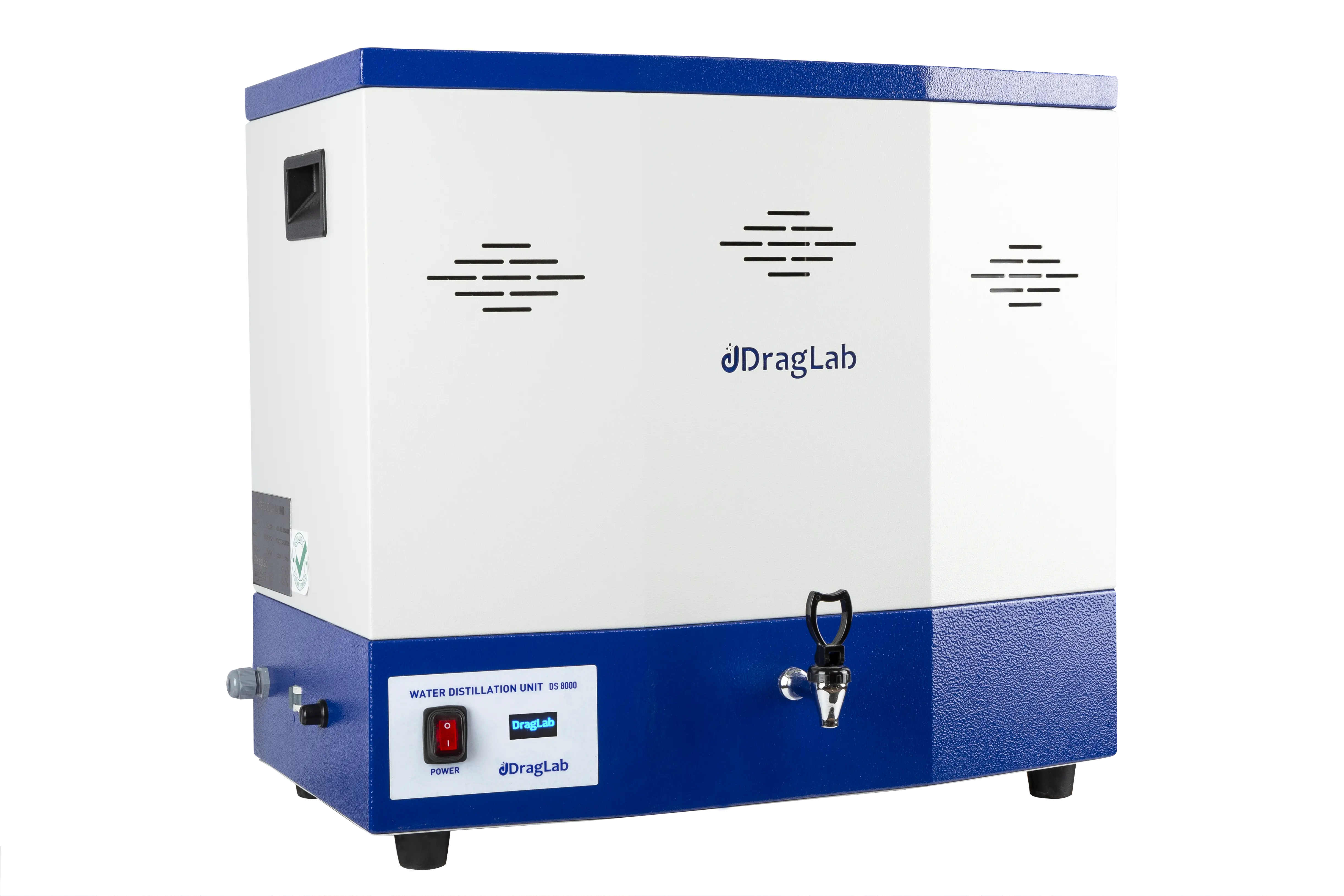
Modern laboratory water stills apply this principle under controlled and automated conditions. Professionally engineered systems, such as the DragLab Water Still Series, are constructed from corrosion-resistant stainless steel and designed for continuous, fully automatic operation. These systems require only a connection to feed water and electrical power, enabling laboratories to produce distilled water on-site with stable quality and minimal operator intervention.
The simplicity, robustness, and independence from consumable purification cartridges make laboratory distillation a reliable and cost-effective solution for many laboratories.
3.3 Deionized (DI) Water
Deionized water is produced by removing charged ions through ion-exchange resins. While this method is effective in reducing conductivity, it does not inherently remove microorganisms, organic compounds, or pyrogens unless combined with additional purification steps such as filtration or UV treatment.
DI water is commonly used for applications where low ionic content is required but may be insufficient for microbiologically sensitive workflows when used alone.
3.4 Purified and Ultrapure Water
Advanced purification systems may combine multiple technologies—such as reverse osmosis, deionization, filtration, and ultraviolet oxidation—to produce purified or ultrapure water. These water grades are required for highly sensitive applications, including molecular biology, cell culture, and trace analytical chemistry.
While offering extremely low impurity levels, such systems often involve higher complexity, consumable dependency, and operational costs.
4. Comparative Overview of Laboratory Water Types
| Water Type | Main Purification Principle | Typical Conductivity | Removes Microorganisms | Common Laboratory Uses |
| Tap Water | None | High / Variable | No | Non-critical cleaning, feed water |
| Distilled Water | Phase change (boil & condense) | Low, stable | Yes | Media prep, rinsing, sterilization, autoclaves |
| Deionized Water | Ion-exchange resins | Very low (ions only) | No (unless combined) | Analytical prep, general lab use |
| Purified Water | RO + DI + filtration | Very low | Partial / Yes | Clinical, pharmaceutical labs |
| Ultrapure Water | Multi-stage + UV oxidation | Extremely low | Yes | Molecular biology, trace analysis |
5. Water Quality Standards in Laboratories
To ensure consistency and reliability, laboratory water quality is commonly defined by international standards. These standards classify water into different grades based on measurable parameters such as conductivity, total organic carbon (TOC), and microbial content.
Commonly referenced criteria include:
-
Classification of water into multiple purity types depending on analytical requirements
-
Defined conductivity limits at standardized temperatures
-
Guidelines for organic, particulate, and microbial contamination
Distilled water typically meets or exceeds the requirements for many routine laboratory applications, making it a practical and widely accepted choice for daily use.
In addition to water quality parameters, laboratories must ensure that water production equipment complies with applicable safety and quality regulations. Laboratory water stills manufactured under certified quality management systems, such as ISO 9001:2015, and bearing CE conformity, provide assurance that both the purification process and the equipment design meet European safety and performance requirements. Systems such as the DragLab Water Still Series are developed within this regulatory framework to support consistent and compliant laboratory operation.
6. Why Distilled Water Remains a Practical Laboratory Solution
Despite the availability of advanced multi-stage purification technologies, water distillation continues to play a central role in laboratories worldwide due to several practical advantages:
-
High reliability: Physical phase separation consistently removes inorganic, organic, and biological contaminants
-
Autonomous operation: Modern water stills are designed for continuous, fully automatic operation with integrated safety controls
-
Low consumable dependency: Distillation does not rely on resins or disposable cartridges, reducing long-term operating costs
-
Wide applicability: Suitable for clinical, research, pharmaceutical, industrial, and educational laboratories
When produced using professionally designed laboratory water stills, distilled water offers stable, reproducible quality that supports both routine laboratory activities and regulated workflows. Systems such as the DragLab Water Still Series, developed by Nanodrag Technology GmbH, demonstrate how established distillation principles can be implemented in modern laboratory infrastructure while aligning with quality and safety standards.
7. Conclusion
Water purity is a foundational element of laboratory performance. Selecting the appropriate water type—and producing it reliably on-site—helps protect analytical accuracy, extend equipment lifespan, and ensure compliance with laboratory standards. Distilled water, produced through controlled laboratory distillation, remains a proven and effective solution for many laboratory applications, offering a balanced combination of purity, reliability, and operational efficiency.
For laboratories seeking consistent, high-quality water without unnecessary complexity, professionally engineered laboratory water distillation systems continue to represent an essential component of modern laboratory infrastructure.
Need help choosing? Contact DragLab today to get a tailored recommendation based on your application.
📧 Email: info@drag-lab.de
🌐 Browse all models: www.drag-lab.de